問4 下線部(5)が指す内容
【元の問題文】
次の英文は、高校生(high school student)の美緒(Mio)と、美緒の隣のクラスの生徒で、フランス(France)からの留学生のジャン(Jean)の対話の一部である。また、図1,図2,図3は美緒が作成しているスライド(slide)である。これらに関して、1から5までの問いに答えなさい。
Mio: Hi, Jean. What do you think about convenience stores in Japan?
Jean: I love them. But ask?
Mio: Because I’m making these slides about convenience stores in Japan.
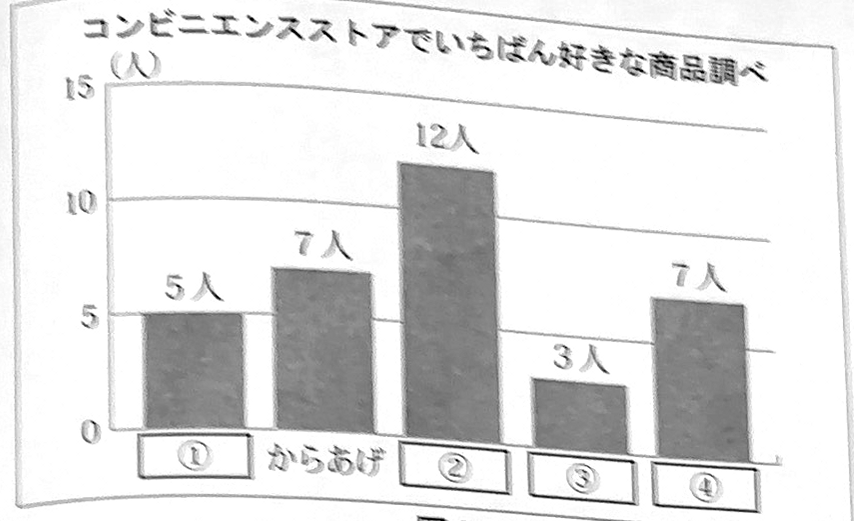
Jean: Sounds interesting. What is (1) this *graph about?
Mio: It’s about the popular convenience store *products *among my classmates. I asked them, “What is your favorite convenience store product?” Onigiri was the most popular. Karaage was not as popular as onigiri, but it was as popular as ice cream. Sweets were not as popular as those three, but more popular than *instant noodles.
Jean: Your classmates like convenience store food. I love convenience store sweets. I can’t *stop buying them.
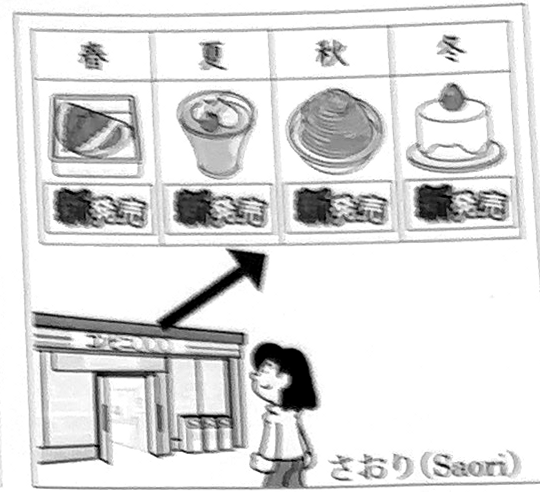
Mio: In my class, five students love convenience store sweets. My friend Saori is one of them. Look at the second slide. She can find new sweets at convenience stores (2), so she often goes there.
Jean: I see. Convenience stores are popular among young people, right?
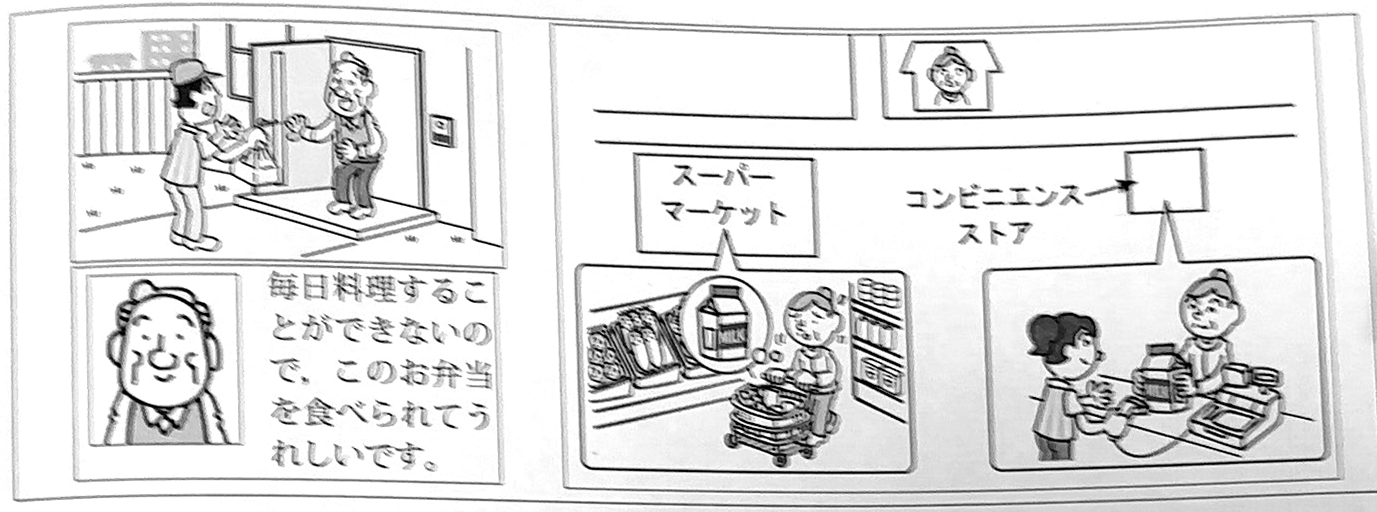
Mio: Yes. They are also popular *among *elderly people. Look at the third slide. A convenience store *staff member *delivers bento to an elderly man’s house. The man says, “I can’t cook every day. So I’m happy (3) this bento.”
Jean: That’s great.
Mio: Let’s look at the elderly woman’s *case. There is a *supermarket and a convenience store near her house. The convenience store (4) than the supermarket, so she likes to go to the convenience store. If she goes to the supermarket, she has to walk around a lot to buy things.
Jean: I see. Now I understand that convenience stores are also popular among elderly people.
Mio: Good. I’m going to make some slides about the problems with convenience stores.
Jean: What are they?
Mio: First, some convenience stores can’t find *enough staff members, *especially at night. Second, a lot of food is *thrown away every day.
Jean: I see. In France, almost all the shops are closed at night.
Mio: I didn’t know (5) that.
Jean: I don’t think all convenience stores in Japan should be *open 24 hours.
Mio: Right. What do people in your country do about food problems?
Jean: They do many things. For example, supermarkets in my country must *pay money when they throw away food.
Mio: People in your country are trying hard ( ). We should think a lot about the food problem.
[注]*graph=グラフ *product=商品 *among〜=〜の間で *instant noodles=即席めん *stop〜=〜をやめる *elderly=年配の *staff member=店員 *deliver〜=〜を配達する *case=場合 *supermarket=スーパーマーケット *enough=十分な *especially=特に *throw away〜=〜を捨てる *open=開いている *pay〜=〜を支払う
4 下線部(5)が指す内容は何か。20字程度の日本語で具体的に書きなさい。ただし、句読点も字数に加えるものとする。
選択肢を選ぶ(並べかえは「答え合わせ」を押す)と、すぐ正解と解説が出る。間違えたら解説を読んで次へ進む。
① that は直前の内容
that は、すぐ前の相手の発言の内容を指すことが多いです。Mio の発言の直前の Jean の発言は「I see. In France, almost all the shops are closed at night.」
Mio が知らなかったことは?